
Four colors, one rule: the cloth that touches a toilet never touches a desk. Color coding makes cross contamination control something you can see across the room.
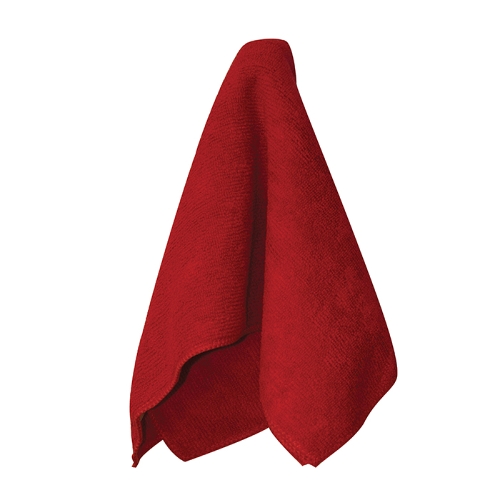
Germs do not stay where they started; they ride on cloths, mop heads, and gloves. One red cloth used in the wrong place can carry restroom bacteria to a break room table. Color coding stops that with a system so simple it works on the busiest night: every color has a territory, and colors never cross the line.

| Color | Where It Cleans | Never Touches |
|---|---|---|
| Red / Pink | Toilets, urinals, and the surfaces right around them | Anything outside the restroom |
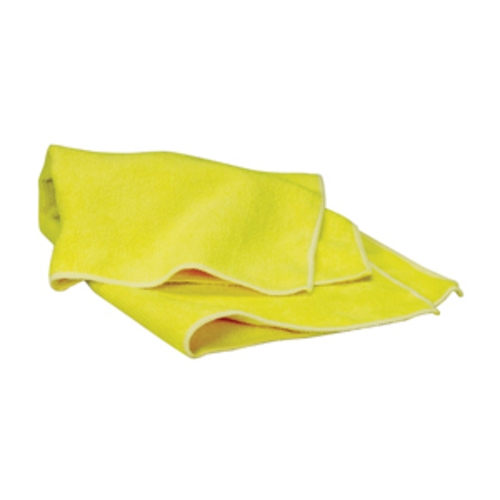
| Yellow | Restroom sinks, counters, partitions, dispensers, and doors | Toilets and urinals; anything outside the restroom |
| Blue | Glass, mirrors, and polished surfaces | Restroom fixtures |
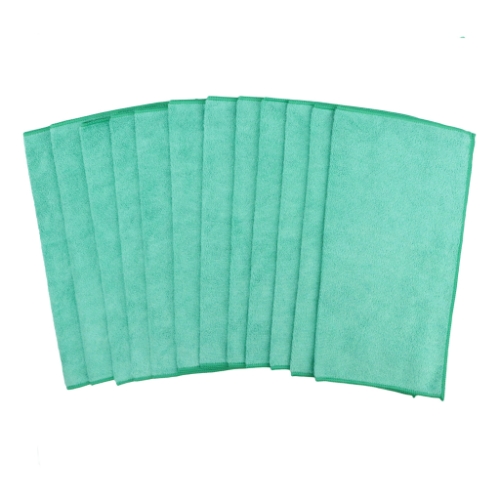
| Green | Desks, tables, counters, dusting, and general surfaces | Restrooms |
| Mop Color | Territory |
|---|---|
| Green or Blue | Common areas: lobbies, hallways, break rooms, offices |
| Red / Pink | Restrooms only. Red pads and red buckets live in the restroom rotation and nowhere else. |
Medical, clean room, and GMP food accounts extend the same idea with extra zone colors. The account's posted color map always wins; these are the common patterns:
| Color | Medical | GMP / Food |
|---|---|---|
| Orange | Treatment rooms | Production & processing floor |
| Yellow | Isolation rooms (dedicated kit) | Allergen control & segregated zones (dedicated kit) |
| Light Blue | Glass & viewing panels | Glass & viewing panels |
| Blue | Break rooms & offices | Break rooms & offices |